Key details
Why you see here what you cannot see at home
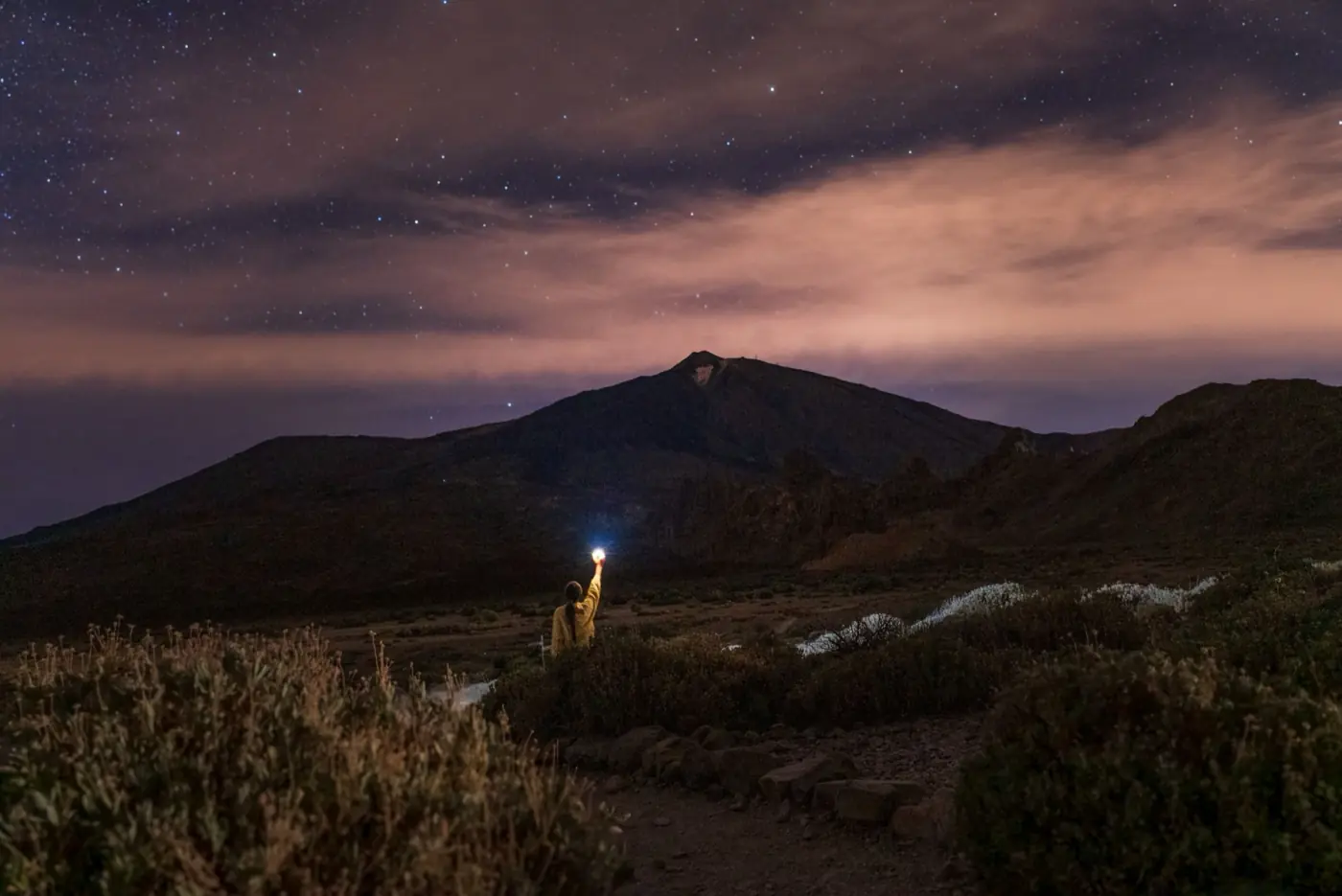
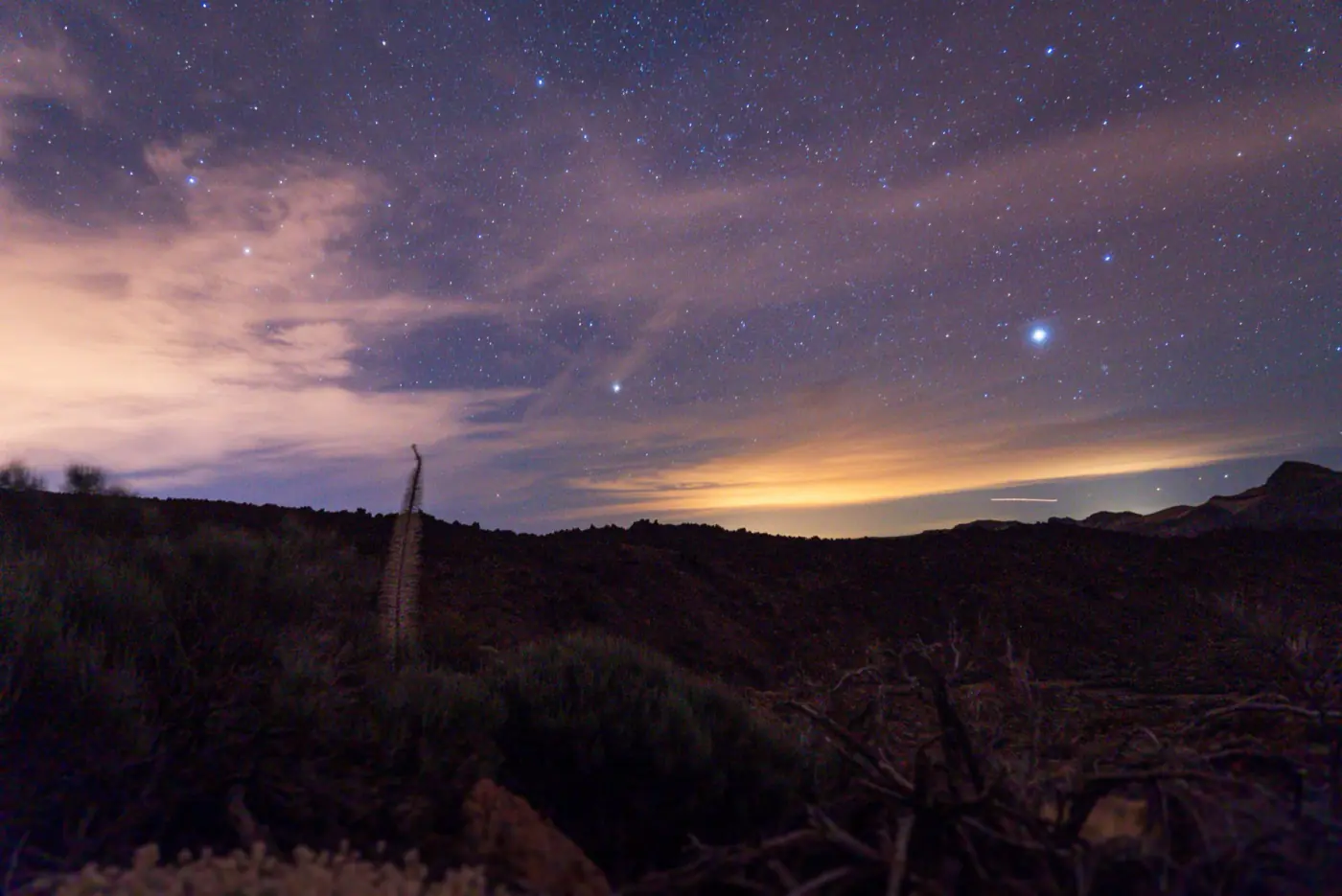
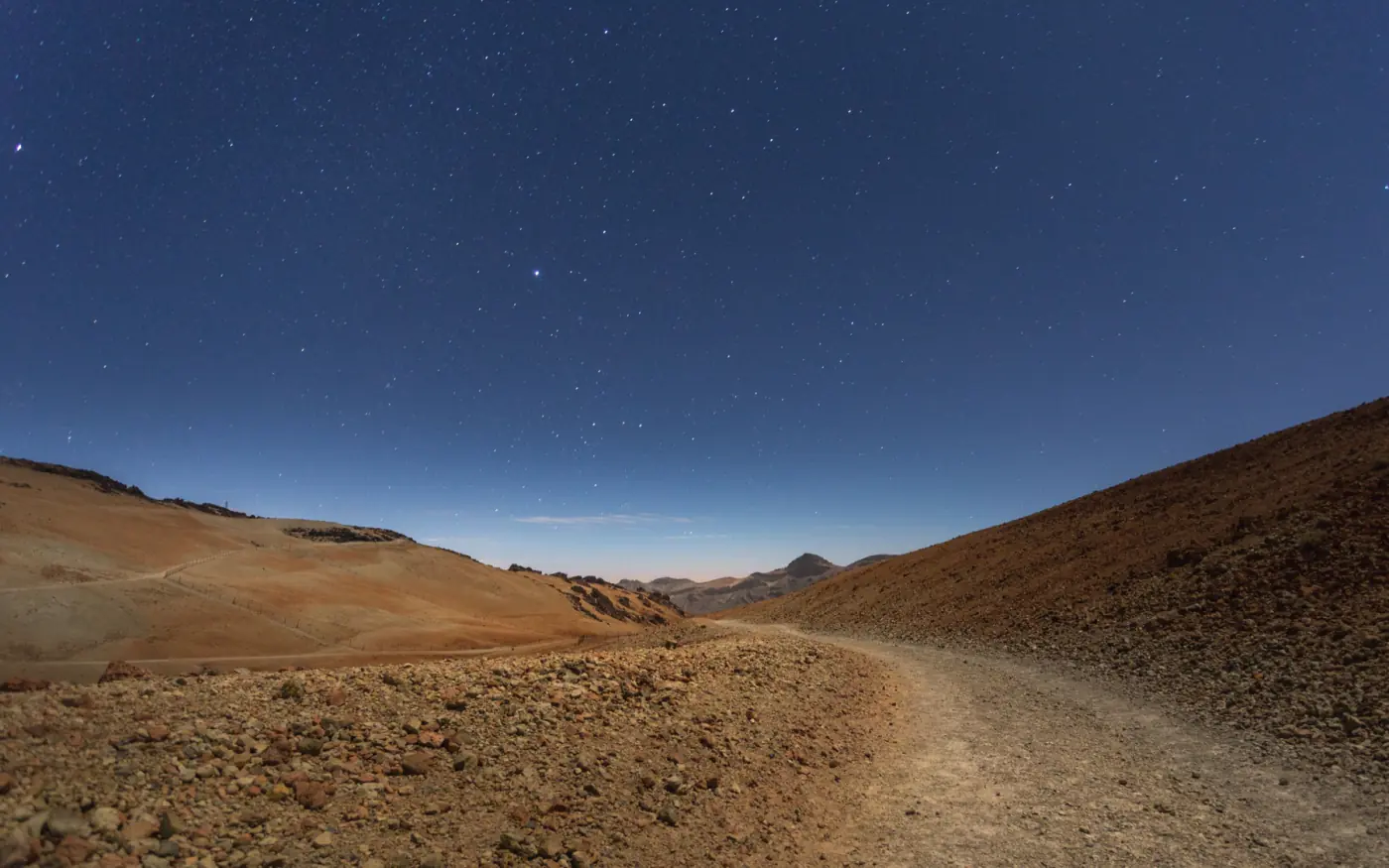
The Teide Observatory sits at 2,390 m and is among the world's best for three reasons that also benefit you as a visitor: almost no light pollution, a very stable atmosphere, and you are above the sea of clouds. That is why professional astronomers come here. And why what you see through an amateur telescope on Teide beats what you would see through a far better one almost anywhere else.
Through the telescopes you see the Moon's craters, Saturn's rings, Jupiter's moons, nebulae and clusters, and the Milky Way is visible to the naked eye. The astrophysicist guide explains what you are looking at, which is what separates this from staring at the sky from a viewpoint on your own. Here is the advice nobody gives you at booking: pick a night near the new moon. With a full moon the sky washes out and the nebulae disappear. Tell us which days you are on the island and we will tell you which one.
At night on Teide it drops to zero even in August, and people always underestimate it. Some operators hand out blankets and warm clothing, but do not count on it: bring long trousers, thick socks, a hat and a proper jacket. Nobody enjoys three hours standing still looking up while freezing, however beautiful the sky.
Included
- Night transfer from South Tenerife
- Certified astrophysicist guide
- Professional telescopes
- Warm clothing (some operators)
- Hot drink (some operators)
- Activity insurance
Not included
- Meals unless stated
- Professional photography
Frequently asked questions
Does it matter which night I choose?
Yes, and it is what most separates a great night from a mediocre one. Close to the new moon you see the Milky Way and the nebulae; with a full moon the sky washes out and you are left with the planets. In winter the nights are longer and the sky is usually cleaner above the clouds; in summer you leave later but the drive up is more comfortable. Tell us your dates and we tell you which night to ask for.
How much does it cost?
There are three prices because they are three different plans. Stargazing with telescopes at the cable car base station is €42 per adult and €37 per child aged 8 to 13: 75 minutes, no transport. It is the one that makes most sense if you have a car and do not mind driving back down from 2,500 m in the dark. Teide by Night, with coach, sunset and a dinner stop, is €89 and €55 up to age 11, and it solves exactly that: the driving. The Astronomic Tour is €109 and €72. Two of you with a car: the first. If you would rather not drive through the park at night: the second, and stop overthinking it.
Group, premium or private: which do I choose?
The group tour is the cheapest way to see the sky with a guide, and for most people it is enough. The premium is the option with professional telescopes: if what you want is a close look at Saturn’s rings or the craters of the Moon, that is the one. The private one makes sense from a family or a group of friends upwards, because the price is shared and the night goes at your pace. If in doubt, start with the group tour.
Do I need warm clothing?
Essential. At 2,000 m at night it drops to 0-5 degrees even in August, and you spend three hours standing still looking up, which is when the cold really gets in. T-shirt, thick jumper, jacket and, if you can, gloves and a hat. Some operators lend blankets, but do not take it for granted.
Can I do it with children?
Yes, and it usually impresses them more than the adults. From 5 or 6 it works well, as long as they can stay still during the observations. What you do need to weigh up is the schedule: you get back late and with small children the next day suffers. If they are very young, better leave it for another trip.
What if it is cloudy or the weather is bad?
Teide is usually above the clouds, especially in winter, so a cloudy day down below means nothing. It is only cancelled with rain or extreme conditions, and then we move your date or refund the full amount. What does ruin the night without cancelling it is the full moon: we check that when choosing the date.
Do we have dinner before or after?
Dinner is not included and the tour leaves at dusk, so in winter you eat when you get back and in summer you either eat early or bring something. A flask with something hot is the best idea nobody has: you are grateful for it after an hour and a half standing still at zero degrees.
Can I go stargazing on Teide on my own?
Yes, with a hire car, and the sky is the same. What you will not have is the telescope or anyone telling you what you are looking at, which is half the point. And the park road at night, unlit and sometimes with fog on the way up, is not for everyone. If you go on your own, go on a new moon and with proper warm clothes.
Can I combine it with the daytime Teide excursion?
Better not. Spending the day walking at 2,000 metres and going back up that same night is too much: you arrive tired, and tired plus cold means you enjoy half of it. Combine the stars with a quiet day at the beach or the pool, and leave daytime Teide for another date. Tell us your free days and we will fit it in.
Which language does the guide explain in?
Spanish, English or French depending on the departure. Tell us which one you want and we confirm the night of your stay that has it; if your language is not available that day, we tell you before you book.
How is the booking confirmed?
Naventia Trips checks availability, provider conditions and the traveller's level before confirming the experience.
Can you tell me what else to do on those days?
Yes, and it is what we get asked most. Tell us which days you have free and where you are staying, and we will say what pairs well with this excursion and what should not go on the same day.